

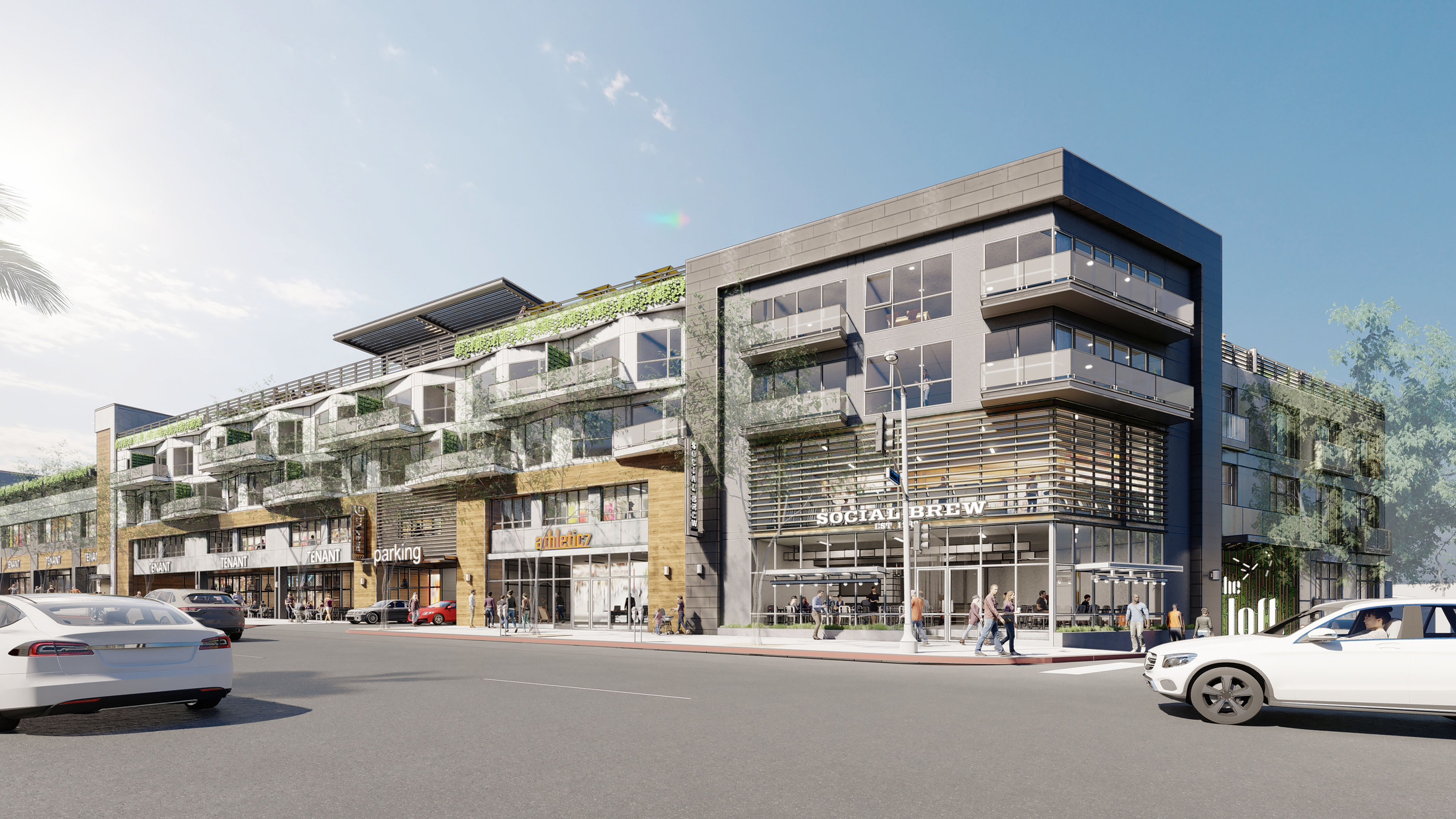
Mixed-Use Development Roofing starts with the condition of the roof in front of us
Commercial roofing for mixed-use developments, urban infill projects, and live-work-play buildings.
Grand Rapids has emerged as one of the Midwest's most dynamic urban real estate markets, with mixed-use development concentrated along the Monroe Center corridor, the Heartside neighborhood south of downtown, and the Medical Mile stretching north along Michigan Street toward Spectrum Health's hospital campus. The city's beer tourism economy - led by dozens of craft breweries occupying converted industrial buildings near the Grand River - has seeded a broader mixed-use transformation where taprooms and food halls share masonry buildings with apartments and boutique offices. These older buildings present roofing complexity that new construction does not: existing structural systems with unknown load capacities, multiple generations of roofing layers that must be abated or removed, and historic preservation overlays that constrain visible changes to parapet profiles and materials.
West Michigan's climate is shaped by Lake Michigan's proximity, which delivers persistent winter cloud cover, heavy lake-effect snow events, and spring precipitation that is more prolonged than in interior Midwest markets. Grand Rapids averages 73 inches of annual snowfall - significantly more than Chicago or Detroit - and the wet, heavy snow that characterizes lake-effect events creates roof live loads that can exceed design capacity when combined with the rain-on-snow loading conditions that occur in late winter when warm Pacific air masses override the cold lake air. Mixed-use buildings in Heartside and Monroe Center that underwent rooftop additions in the 1990s without structural analysis often have load-path constraints that limit the weight of new roofing assemblies, making lightweight single-ply systems on recovery boards the only viable re-roofing option without expensive structural reinforcement.
Ice dams are a practical reality on Grand Rapids mixed-use buildings, particularly in the stepped-profile buildings where a lower commercial section abuts the wall of a taller residential component. Heat escaping from the occupied lower floor warms the lower roof membrane, melting snow that then refreezes at the colder parapet edge. The resulting ice dam forces water under the membrane at the eave or at low-slope transitions, entering the building at the retail-to-residential boundary - one of the most consequential water intrusion points in a mixed-use building. Air sealing at the roof-wall interface, combined with increased insulation at lower roof perimeters and heated drains at interior drain bodies that are vulnerable to freeze blockage, forms the defensive strategy for ice dam prevention in Grand Rapids commercial roofing.
The Medical Mile corridor is Grand Rapids' most active zone for new mixed-use construction, with projects like the Studio Park development setting a standard for transit-oriented urban living that other developers are racing to match. These newer buildings - four to eight stories of apartments above health and wellness retail, fitness studios, and ground-floor medical office suites - have the advantage of being designed from scratch for modern roofing system integration. EPDM adhered systems in white or gray have become the specification of choice on the Medical Mile because they perform well in Grand Rapids' wet, cold climate, accept the high insulation R-values required by Michigan's energy code, and accommodate the complex penetration schedules typical of mixed-use HVAC systems without the dimensional stability challenges that mechanically attached TPO exhibits under thermal stress in cold climates.
Rooftop amenity spaces in Grand Rapids face a genuine four-season challenge. A rooftop deck that serves as a summer leasing amenity must also survive Michigan winters without structural damage to paver systems, pedestal bases, or the waterproofing membrane beneath. The freeze-thaw cycling in Grand Rapids is more severe than Fort Worth or Fresno because moisture levels are higher - wet snow and freezing rain create ice loading conditions on paver pedestals that purely dry-cold climates do not produce. Paver pedestal systems in Grand Rapids should use stainless steel or high-density polyethylene pedestals rather than aluminum, which fatigues under repeated freeze-thaw loading. Seasonal removal of furniture and planters, combined with spring inspections of pedestal positions and membrane condition, is the standard maintenance protocol for Grand Rapids rooftop decks.
Grand Rapids' craft brewery economy has produced a roofing challenge unique to its mixed-use market: grain storage, fermentation equipment, and commercial kitchen exhaust stacks are common on buildings that also house apartments above. Fermentation exhaust contains carbon dioxide and organic compounds that have been documented to accelerate degradation of single-ply membrane materials when concentrated at exhaust discharge points. Brewery tenants in Heartside mixed-use buildings should have exhaust discharge systems that elevate the outlet above adjacent roof surfaces by at least four feet - sufficient to dilute the exhaust stream before it contacts the membrane - and membrane sections near brewery exhaust should be inspected annually for discoloration or brittleness that indicates chemical degradation.
Questions We Answer Before Work Starts
How do you decide whether Mixed-Use Development Roofing needs repair or replacement?
We start with roof condition, moisture concerns, drainage, age, access, and recurring leak history. Repair is recommended when it solves the problem cleanly. Replacement is discussed when repeated repairs are only chasing symptoms.
Can the building stay open during mixed-use development roofing work?
Most commercial roof work can be staged around an active building when access, loading, noise, odors, and end-of-day dry-in are planned before crews arrive.
What do owners receive after an inspection?
Typical documentation includes photos, notes on membrane and metal conditions, drain observations, repair priorities, and a practical next-step recommendation.