

Commercial Roof Preventive Maintenance Program starts with the condition of the roof in front of us
A useful maintenance program records recurring conditions, clears drainage, services vulnerable details, tracks repairs, and turns each visit into a prioritized roof history. Commercial Roof Preventive Maintenance Program in Grand Rapids, MI - commercial roofing assessment, documentation, and program management for MI property owners.
Grand Rapids' commercial corridors span the I-196 and US-131 industrial zones, the Monroe Center and Heartside redevelopment districts, the Knapp's Corner retail belt, and the expanding Cascade Township employment area. Commercial roof preventive maintenance programs in this market protect warranty validity, provide the semi-annual inspection documentation that major manufacturers require, and generate capital planning forecasts that let property owners and facilities managers budget for roofing expenditures before an emergency forces the decision.
Commercial roof preventive maintenance in Grand Rapids, MI is the most cost-effective strategy for extending roof system service life and protecting your capital investment. Most commercial roofing warranties - TPO, PVC, EPDM, and modified bitumen systems - require documented semi-annual or annual maintenance inspections to remain valid. Our maintenance program fulfills those warranty requirements, generates the documentation your warranty requires, and produces a capital planning forecast that tells you when major maintenance or replacement will be needed - before you're dealing with an emergency.
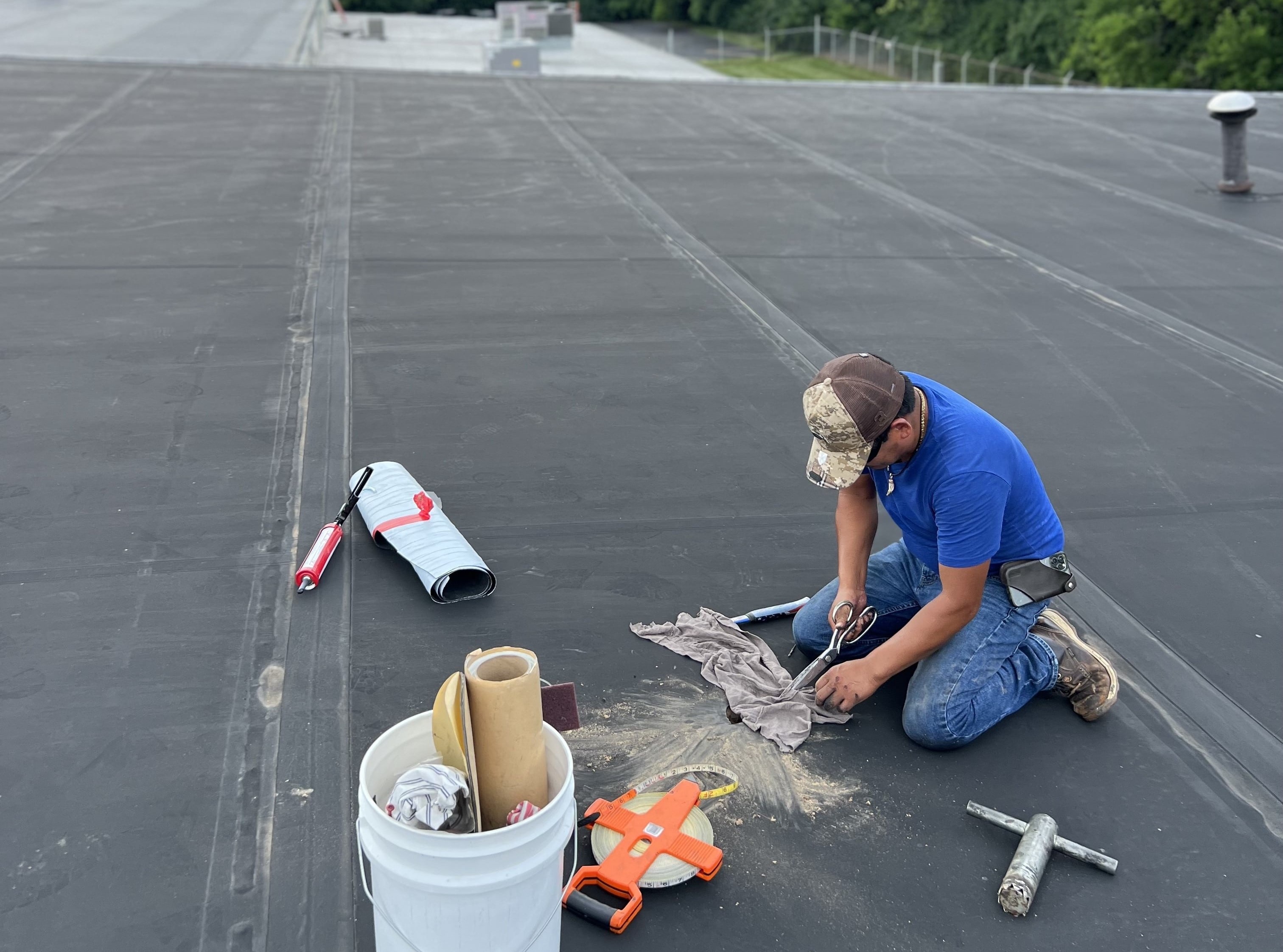
A commercial roof maintenance visit in Grand Rapids includes a complete roof inspection with written condition report, photographic documentation of all observed deficiencies, minor repairs performed during the inspection visit (drain clearing, minor membrane repairs at splits or blisters, flashing reseats that have lifted), and a priority list of work needed before the next inspection cycle. Drain clearing alone - which most maintenance programs treat as a separate billable service - is included in every inspection visit because blocked drains are the single most preventable cause of commercial roof failures.
Our maintenance program also generates a capital planning forecast that gives your facilities or property management team a 3-5 year outlook on roofing expenditures by building. For commercial real estate portfolios in Grand Rapids with multiple buildings, a consistent annual maintenance program across the portfolio gives you a systemwide condition picture that reactive repair calls can never provide. You'll know which buildings are approaching end of system life before they start leaking, and you can budget accordingly.
Properties under commercial property insurance policies in Grand Rapids may receive premium reductions or favorable renewal terms when documented maintenance records demonstrate a proactive maintenance program. We provide maintenance records in a format compatible with standard commercial property management software and insurance documentation requirements.
Our standard maintenance visit includes: complete roof inspection with written condition report and photographs, drain clearing and confirmation of drainage function, minor membrane repairs (splits, blisters, open laps under 12 inches), flashing reseats at lifted terminations, HVAC curb cap inspection and re-caulking where needed, and a written priority list of work needed before the next cycle. The visit report goes to the property owner or facilities manager within 48 hours of the inspection.
Questions We Answer Before Work Starts
How do you decide whether Commercial Roof Preventive Maintenance Program needs repair or replacement?
We start with roof condition, moisture concerns, drainage, age, access, and recurring leak history. Repair is recommended when it solves the problem cleanly. Replacement is discussed when repeated repairs are only chasing symptoms.
Can the building stay open during commercial roof preventive maintenance program work?
Most commercial roof work can be staged around an active building when access, loading, noise, odors, and end-of-day dry-in are planned before crews arrive.
What do owners receive after an inspection?
Typical documentation includes photos, notes on membrane and metal conditions, drain observations, repair priorities, and a practical next-step recommendation.