

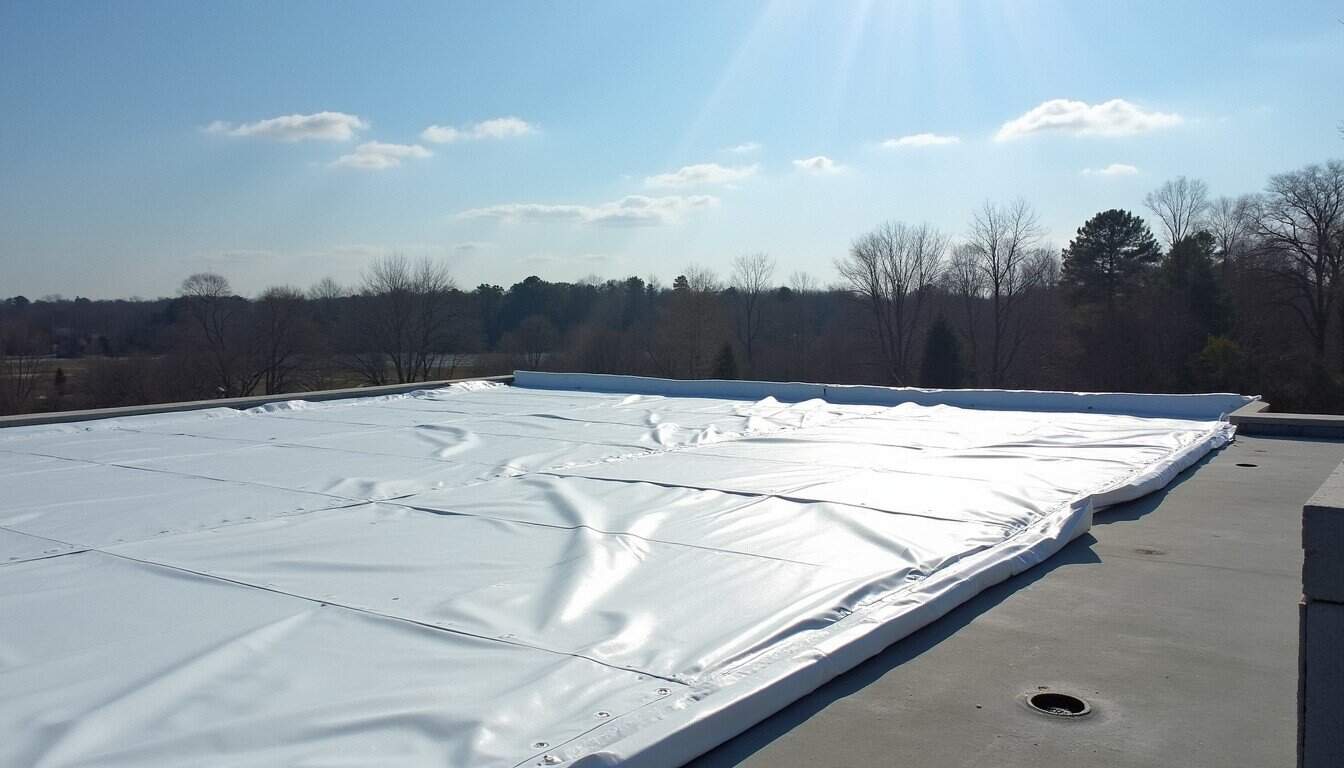
A severe thunderstorm line or a derecho-strength wind event moves through West Michigan fast, and the roof damage it leaves can be just as fast to misread. Wind rarely tears a low-slope membrane wide open the way storm footage suggests , more often it lifts a seam, pulls flashing loose at a parapet, or drives debris into a rooftop unit, and all of that can look like ordinary wear if nobody photographed it close to the storm date.
We’re your roofing contractor, not a public adjuster , we document and substantiate the roof damage so you and your adjuster work from an accurate scope. On wind claims, that means getting to specifics fast: what lifted, where, and how the pattern lines up with the direction and force of the event that came through.
Wind pressure concentrates at roof edges, corners, and any point where the membrane transitions , parapet walls, rooftop unit curbs, expansion joints. That’s usually where we find the first signs of uplift: a seam that’s separated at the edge, coping that’s rocking loose, counterflashing pulled away from a wall. Debris impact tells a second story, from tree limbs and construction material to accessories that blew off the building itself and can sometimes be recovered on the ground as physical evidence.
One of the harder parts of a wind claim is separating storm damage from ordinary aging. A seam that failed from years of adhesive breakdown looks similar to one pulled apart by wind at first glance. We document the surrounding field condition alongside the damaged area , adhesive residue, membrane flexibility, fastener spacing , so the description in front of the adjuster explains why a specific failure is consistent with wind uplift rather than a general wear pattern.
Timing matters as much as technique. We walk the roof as soon as it’s safe to access after an event, photograph displaced materials before they get moved or thrown away, and secure anything at risk of blowing off entirely while documentation is still underway. A loose section of coping left unsecured for a week can turn one wind claim into two.
A complete wind-damage scope looks past the single lifted section. If wind pulled one run of edge metal loose, we check fastening along the entire perimeter run, beyond the one visible failure point, because a storm strong enough to lift one section has usually stressed the fasteners on either side of it too. Where water entered during the event, we also account for what that moisture reached , insulation, deck, interior finishes , before it becomes a secondary damage problem the original claim didn’t anticipate.
Grand Rapids’ geography shapes how wind moves across a roof. Downtown, older brewery and adaptive-reuse buildings sit close to newer construction, and the wind funneling between structures can concentrate pressure on roof edges in ways a standalone building wouldn’t see. The medical mile’s dense rooftop mechanical equipment gives wind more surfaces to catch on. West Michigan’s furniture-industry campuses carry long, exposed roof edges with direct line-of-sight exposure across open parking and yard space. Distribution buildings along the US-131 and I-96 corridors run parapet lengths measured in hundreds of feet, where one fastening failure can progress the length of an entire run if it isn’t caught early.
When wind damage has already caused an active leak, we treat emergency tarping and temporary fastening the same way we treat any other stabilization work: document what we can first, then get the roof watertight, and finish the full photo and measurement record once the immediate risk is under control.
If a recent storm left anything loose, lifted, or missing on your roof, a roof review now gives you dated documentation while the wind pattern is still fresh and easy to read , before the next system moves through and complicates the picture.
Questions We Answer Before Work Starts
How is wind damage documented compared to hail?
Wind documentation focuses on displacement and uplift , lifted seams, loose edge metal, missing accessories, debris paths , rather than the impact marks hail leaves. We also document surrounding field condition so the adjuster can see why a failure is consistent with wind rather than gradual wear.
What if the wind only lifted one section of the roof?
We still check fastening and seam condition along the full perimeter run and any connected sections, since the forces that lifted one area often stressed the material around it even where it hasn’t failed yet. A scope that only addresses the visible spot can leave related damage undocumented.
Can debris impact from a wind event be included in the same claim?
Yes. We photograph debris found on the roof, note where it likely came from when that’s determinable, and document any impact damage , punctures, dents, torn membrane , alongside the wind-uplift findings as part of the same storm event.
How quickly should we call after a wind event?
As soon as it’s safe to get on the roof. Loose or lifted material left in place risks further loss in the next wind event, and documentation is easiest to read while the damage pattern is fresh and unaffected by additional weather.
Will you help distinguish storm damage from age-related wear?
That’s a core part of what we document. We record the condition of the surrounding, undamaged field alongside the failure point so the technical explanation for why something is storm-related, not simply old, is part of the record your adjuster reviews.