

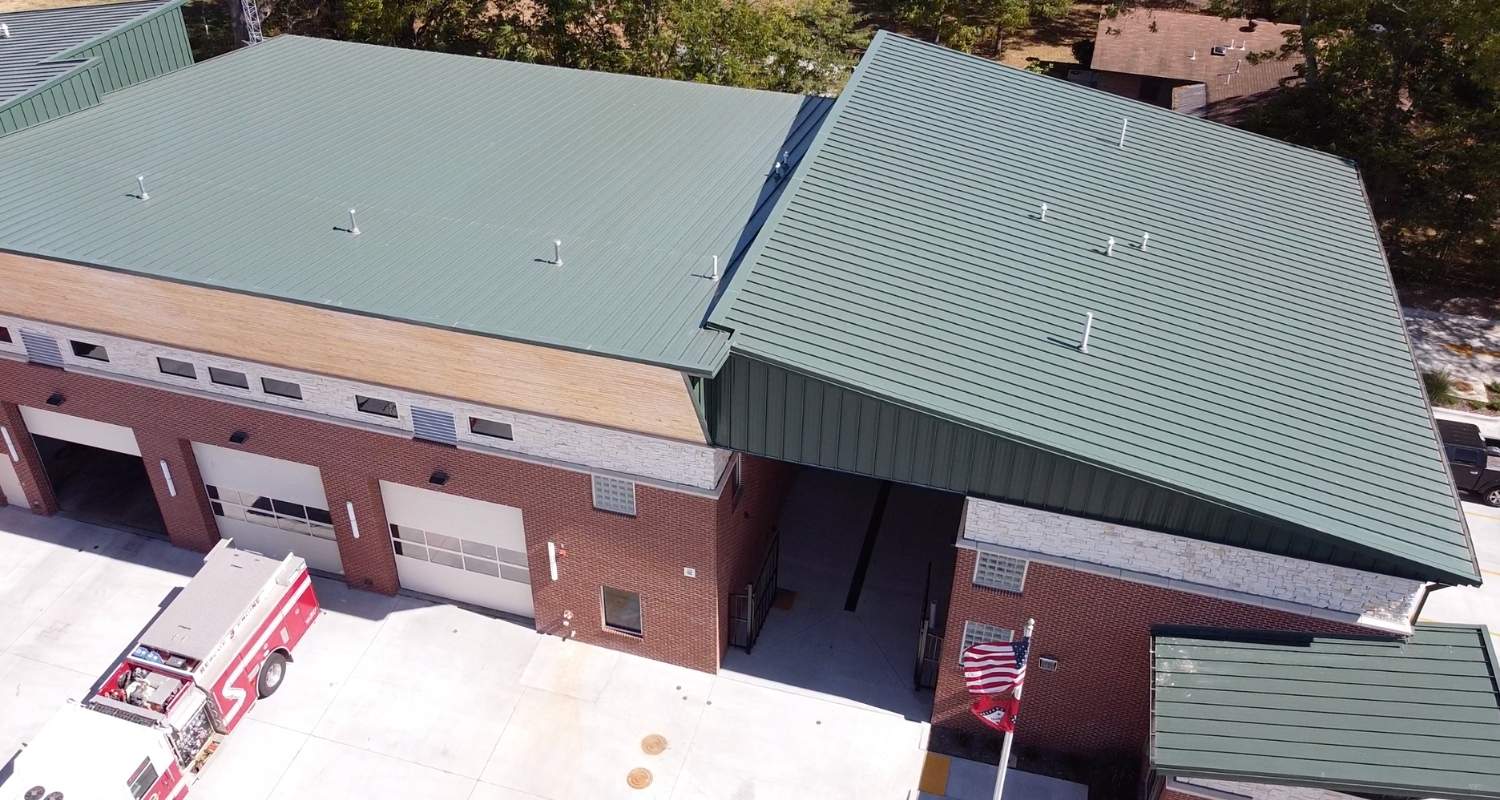
Fire Station & Emergency Services Facility Roofing changes access, staging, and risk below the roof
Commercial roofing for fire station & emergency services facility roofing in Grand Rapids, MI - specifications, scheduling, and project coordination for this building type.
Fire station roofing is not a specialty that many commercial contractors can credibly claim. The operational constraints - alarm protocols, apparatus bay door clearance, crew quarters access, public safety facility procurement compliance - require a contractor who has worked in a staffed, operational fire station and understands the environment. The technical requirements - apparatus bay expansion joint design, diesel exhaust exposure specification, historic firehouse material matching - require a contractor who has thought through what makes fire station roofing different from standard commercial work. Ask your bidders directly: how many fire stations have you re-roofed, and what was the alarm protocol your crew followed? The answer tells you immediately whether they've done this before.
The pre-bid walkover for a fire station roofing project in Grand Rapids is the first test of contractor qualification. A qualified contractor walks the station with the station commander present, identifies every apparatus bay door clearance zone, asks about the station's typical alarm frequency and response patterns, confirms the crew quarters access requirements, and reviews the existing roof condition with the structural context of the bay construction in mind. A contractor who does a standard commercial roof inspection without engaging the operational questions hasn't understood the project. The walkover tells you as much about the contractor as the proposal does.
Evaluate on scope completeness first: does the proposal address the alarm protocol, the apparatus bay transition detail, the prevailing wage compliance plan, and the public facility warranty requirements? A proposal missing any of these elements is incomplete regardless of its price. Evaluate on references second: do the provided references confirm fire station experience? Evaluate on price third: among compliant, qualified proposals, the lowest compliant price is the right selection for a public bid project. Don't approval to an incomplete proposal to save money - the gaps will cost more than the apparent savings.
Performance and payment bonds at 100% of the contract value are the standard requirement for public fire station re-roofing projects in MI. The bonding requirement protects the fire department against contractor default - if the contractor fails to complete the project, the performance bond funds completion by a replacement contractor. The payment bond protects material suppliers and subcontractors against non-payment. Both are standard public contract requirements and both should be required regardless of project size when public funds are involved.
Allow 3-4 months from the decision to re-roof to the first day of construction: 2-3 weeks for specification preparation and bid document development, 3-4 weeks for the public bid advertisement period, 1-2 weeks for bid evaluation and approval, 2-4 weeks for contract execution and bonding. Total: 10-15 weeks. Compressed timelines produce incomplete bid documents, fewer qualified bidders, and higher prices. For projects budgeted in the current fiscal year with a hard construction deadline, start the procurement process no less than 5 months before the deadline.
Questions We Answer Before Work Starts
How do you decide whether Fire Station & Emergency Services Facility Roofing needs repair or replacement?
We start with roof condition, moisture concerns, drainage, age, access, and recurring leak history. Repair is recommended when it solves the problem cleanly. Replacement is discussed when repeated repairs are only chasing symptoms.
Can the building stay open during fire station & emergency services facility roofing work?
Most commercial roof work can be staged around an active building when access, loading, noise, odors, and end-of-day dry-in are planned before crews arrive.
What do owners receive after an inspection?
Typical documentation includes photos, notes on membrane and metal conditions, drain observations, repair priorities, and a practical next-step recommendation.