

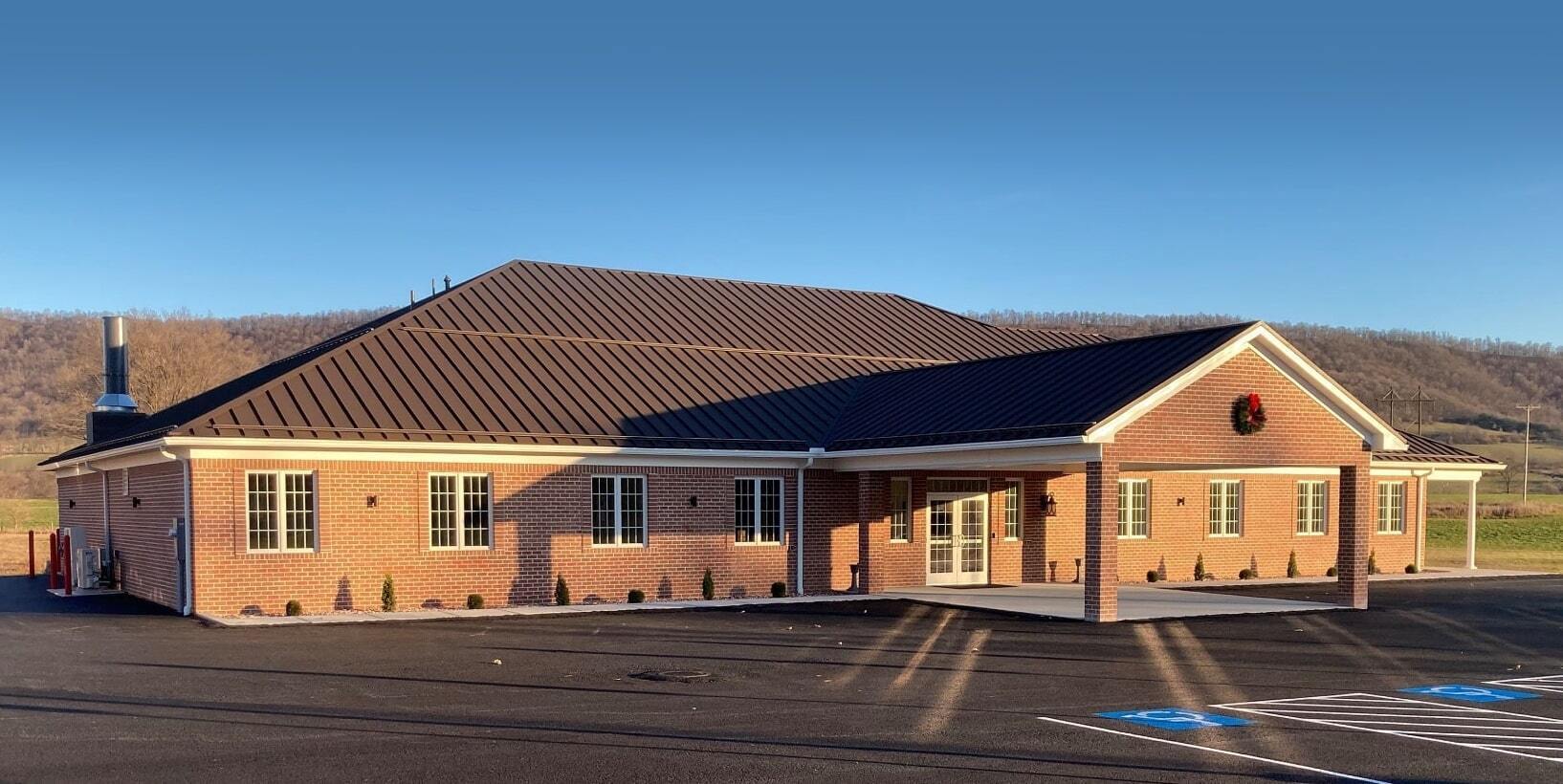
Funeral Home & Mortuary Roofing changes access, staging, and risk below the roof
Funeral Home & Mortuary Roofing in Grand Rapids, MI - commercial roofing for funeral home & mortuary roofing properties.
A funeral home almost never has an empty week. Visitations run weeknights, services land on Saturdays, and a death call can fill the chapel on three days' notice. That reality drives how we plan every reroof in Grand Rapids. Before a single fastener is pulled we sit down with the funeral director and map two or three weeks of the calendar, then sequence tear-off and dry-in so the loudest work happens on the quietest days and never overlaps a family's hardest hours. The established funeral homes along Eastern Avenue and Plainfield Avenue, the parlors serving the Heritage Hill and East Hills neighborhoods, and the larger facilities out toward Cascade and Kentwood each run their own rhythm, and we build the schedule around that rhythm rather than asking the building to bend to a crew.
Behind the chapel and visitation rooms is the part of the building the public never sees: the embalming and preparation area. That room runs under negative pressure and vents formaldehyde and other vapors through a dedicated rooftop stack that has to keep pulling air the entire time we are on the roof. We locate that stack on the first walk, carve it out as its own flashing scope, and confirm with the director that exhaust stays live during any work within reach of it. We do not cap it, block it, or treat it like an ordinary plumbing vent for the sake of a clean membrane line. The same goes for the cooler and any refrigeration condenser serving it - those penetrations get flashed around without interrupting what they keep cold.
Many Grand Rapids funeral homes were built or expanded with a chapel that opens up to forty or sixty feet without a column in the middle, and a few older parlors occupy converted homes and churches in the historic districts where the roof framing is wood. A clear span like that flexes and catches wind differently than the flat back-of-house roof, so it gets its own fastening pattern and, on wood decks, a pull-out test before we commit to an attachment design. Older built-up roofs over those spaces routinely hide wet insulation under a surface that still looks intact, which is why we core and run a moisture scan before anyone decides whether to recover or tear off. Recovering over saturated board only buries the problem under a warranty.
Appearance matters here in a way it does not on a warehouse. Families arrive grieving, and a dumpster parked across the front entrance or debris blowing across the lawn during a service is a problem the funeral home will remember long after the roof is dry. We stage materials away from the main entrance and the porte-cochere drop-off, keep the lawn and walkways clean at the end of every shift, and route the crew so the front of the building stays presentable through visitation hours. The covered entry canopy gets attention of its own: the canopy-to-wall transition and its drainage are a chronic leak point on these buildings, and we flash that joint as a discrete item rather than assuming the field membrane will carry it.
Grand Rapids sits in the lake-effect snow belt, and a flat funeral home roof can hold a heavy, wet load through January and February. Under-drained or ponding roofs that freeze and thaw chew through a membrane fast, so we correct slope with tapered insulation where the existing deck drains poorly and make sure interior drains and overflow scuppers are sized and clear before winter. A leak over a casketed chapel or a visitation room during a snowmelt is not a maintenance inconvenience - it is a service that cannot happen - so the drainage plan is part of the scope, not an upsell after the fact.
Funeral homes in this market tend to be either long-running family businesses, often third or fourth generation, or locations inside a regional group with facilities handled at the corporate level. Both want the same things from a roofer: discretion, a schedule that respects the families in the building, and a clear closeout package. We give the same advance notice and daily dry-in confirmation to the family owner who lives above the business as to the regional facilities manager reviewing the job from another city.
Questions We Answer Before Work Starts
How do you decide whether Funeral Home & Mortuary Roofing needs repair or replacement?
We start with roof condition, moisture concerns, drainage, age, access, and recurring leak history. Repair is recommended when it solves the problem cleanly. Replacement is discussed when repeated repairs are only chasing symptoms.
Can the building stay open during funeral home & mortuary roofing work?
Most commercial roof work can be staged around an active building when access, loading, noise, odors, and end-of-day dry-in are planned before crews arrive.
What do owners receive after an inspection?
Typical documentation includes photos, notes on membrane and metal conditions, drain observations, repair priorities, and a practical next-step recommendation.